Welcome to the Microservices Journey
Microservices represent a fundamental shift in how we build software. Instead of monolithic applications, we structure systems as loosely coupled, independently deployable services. This architectural approach enables organizations to scale rapidly, deploy frequently, and embrace technological diversity—all while maintaining system resilience and clarity.
The rise of microservices reflects broader shifts in technology and business strategy. Just as investors analyze how AMD surged past $300 on MI450 hype — the numbers behind the rally, companies evaluate architectural decisions through the lens of innovation velocity and market competitiveness. Modern enterprises recognize that the ability to deploy changes rapidly—whether in hardware acceleration or software services—directly impacts their competitive advantage.
Understanding microservices requires appreciating how distributed systems enable organizational agility. The financial sector provides compelling examples: platforms redesigning their infrastructure must understand both technological patterns and market dynamics. This is where knowing reading financial statements without an accounting degree becomes relevant—when evaluating infrastructure investments, teams need to understand the business impact. Similarly, geopolitical and supply-chain factors—like the Strait of Hormuz blockade and its ripple effects on global markets—can shape whether enterprises choose local versus globally distributed service architectures.
Microservices in Fintech NEW
Discover how leading trading platforms leverage microservices to handle real-time market data, ensure resilience during extreme load, and enable rapid feature deployment in the fintech ecosystem. Related insights: Robinhood earnings miss market reaction analysis.
Explore Fintech Architecture →Service Communication & Messaging
Master inter-service communication patterns, message brokers, and event-driven architectures. Explore synchronous vs. asynchronous patterns, message delivery guarantees, and real-world communication topologies for robust microservices systems.
Explore Service Communication →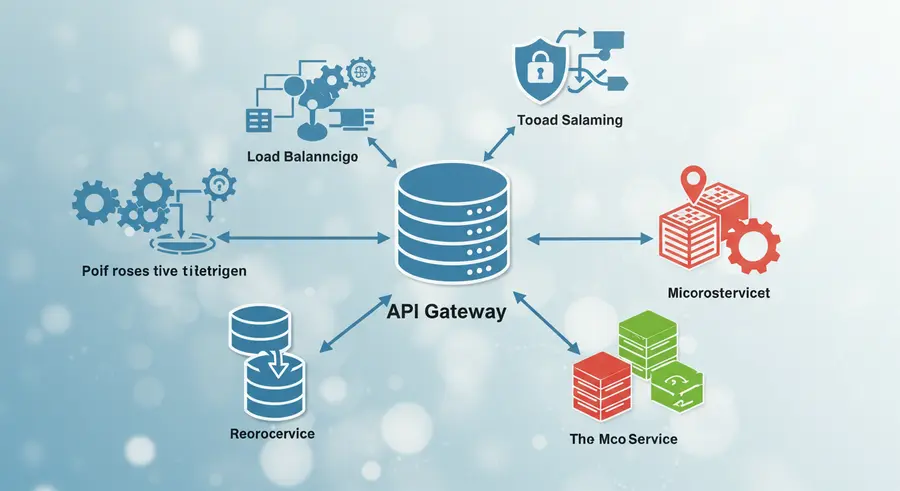
The Pivotal Role of an API Gateway
In microservices ecosystems, the API Gateway serves as the critical entry point, managing request routing, security policies, rate limiting, and protocol translation. It shields clients from service complexity while enforcing consistent cross-cutting concerns across your distributed system.
Explore API Gateway →New Explainers
Understanding Investment Risk: From Beta to Black Swans — Understanding Investment Risk: From Beta to Black Swans
How Trades Actually Get Executed — How Trades Actually Get Executed
Layer-2s, Swaps and Validators: A Crypto Primer — Layer-2s, Swaps and Validators: A Crypto Primer
Latest Reading
Developer Compensation Trends in the AI Era: Salaries, Equity, and Strategy — Developer Compensation Trends in the AI Era: Salaries,...
Understanding the AI Capex Supercycle: $100B+ Bets and What They Mean — Understanding the AI Capex Supercycle: $100B+ Bets and...
Why Microservices Matter Today
Traditional monolithic architectures struggle under the demands of modern software development. As systems grow, codebases become difficult to maintain, deployment becomes risky, and scaling becomes problematic. Microservices address these pain points by enabling teams to work autonomously on independent services. Consider the strategic decisions that drive major platform changes: organizations like Netflix, which launched a $25B buyback after stock slumps—demonstrating how share repurchases actually work for investors, also invest heavily in infrastructure modernization to stay competitive.
By breaking applications into smaller, focused services, organizations gain agility. Teams can develop, test, and deploy services independently. Different services can use different technology stacks. When one service fails, others continue operating. This resilience, combined with the flexibility to choose the right tool for each problem, makes microservices the architecture of choice for many enterprises today. The infrastructure landscape is rapidly evolving: emerging players like Nebius, which eyes AI21 Labs in a full-stack AI infrastructure push, represent how compute resources and microservices architectures increasingly intertwine with artificial intelligence capabilities.
Navigate Your Learning Path
This guide covers everything you need to understand microservices architecture:
- What are Microservices? — Learn the foundational concepts and core principles
- Benefits of Microservices Architecture — Understand improved fault isolation, scalability, and technology flexibility
- Challenges in Implementing Microservices — Navigate distributed system complexity, consistency issues, and operational overhead
- Common Microservices Design Patterns — Master proven solutions like service discovery, circuit breakers, and saga patterns
- Tools & Technologies for Microservices — Explore the ecosystem including orchestration, messaging, and monitoring platforms
- The Future of Microservices — Look ahead at emerging trends and evolution of distributed architecture
Strategic Technology Convergence
The intersection of microservices architecture and emerging technologies is reshaping software development priorities. The tech ecosystem is consolidating around powerful AI and software integration plays. SpaceX's $60B Cursor option and the new AI-software convergence trade signals a major market shift: companies are bidding aggressively on tools that combine autonomous development capabilities with scalable infrastructure. This convergence directly impacts how teams design microservices—where decision-making increasingly involves understanding both technical architecture and market positioning.
Building robust distributed systems also requires understanding market mechanics at a fundamental level. Teams responsible for financial services or trading platforms must grasp how equity markets actually work under the hood. This knowledge informs decisions about latency tolerances, consistency guarantees, and failure modes—critical considerations when architecting services for mission-critical domains where market conditions and regulatory requirements directly shape system design.
Advanced Concepts & Integration
Understanding microservices requires familiarity with complementary architectural patterns and technologies. When evaluating complex systems—whether in software engineering or other domains—you need sophisticated tools to make informed decisions.
For example, just as an AI shepherd orchestrates autonomous agents to coordinate complex workflows, microservices require careful orchestration to manage inter-service communication, data consistency, and system resilience. Understanding agentic AI patterns can inform how you design service interactions and asynchronous communication strategies.
Staying current with microservices evolution is equally important. Keep informed through resources like daily AI summaries and latest research digests to discover emerging patterns in distributed systems, cloud-native technologies, and AI-driven infrastructure automation. The intersection of microservices and machine learning intelligence increasingly shapes how teams design scalable, adaptive systems.
Related Architecture Guides
Expand your architectural knowledge with these complementary resources:
- Demystifying Serverless Architectures — Understand event-driven, function-as-a-service models
- Cloud Computing Fundamentals — Master the infrastructure supporting distributed systems